
Spring 2026-Agroecology Class
As part of the Agroecology in Action initiative, students in FST320 have been engaging in a series of collaborative, hands-on projects that emphasize sustainability, ecological design, and adaptive land stewardship. Working across multiple sites, their efforts focus on improving functionality, increasing biodiversity, and responding to environmental challenges through practical, field-based solutions.
These projects reflect a shared goal of creating more resilient agroecosystems while deepening students’ understanding of agroecological principles in real-world settings. From landscape redesign to infrastructure improvements and pollinator support, each initiative contributes to a more integrated and sustainable approach to food production and land management.
Apiary Bee Project
The Bee Team is actively building swarm traps and hive stands to support the apiary team’s growing needs. Their efforts are focused on introducing new bee genetics that can better withstand increasingly unpredictable weather patterns driven by climate change, helping strengthen the resilience and long-term health of the apiary’s colonies.
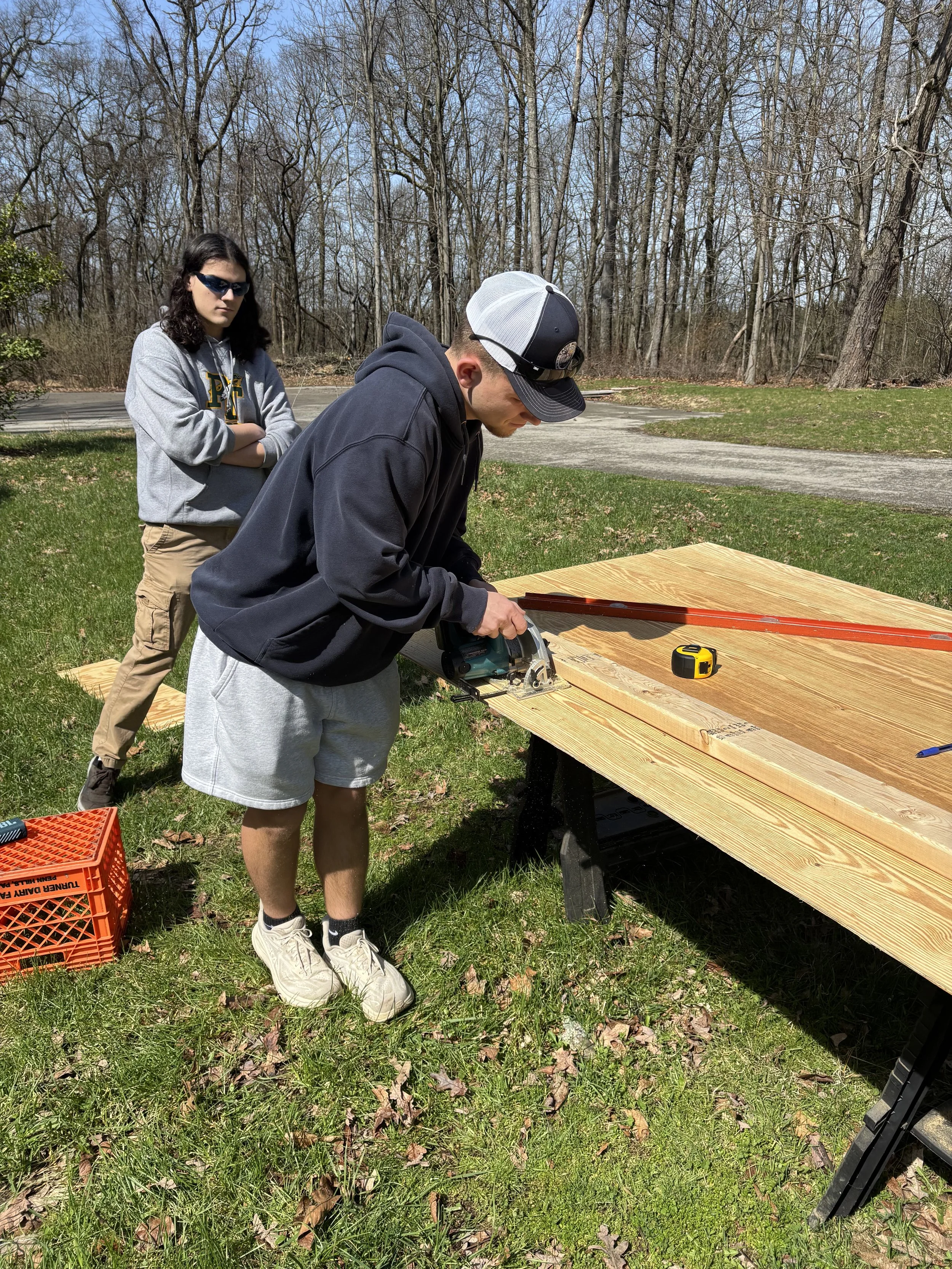
(Anthony working outside the storage barn).
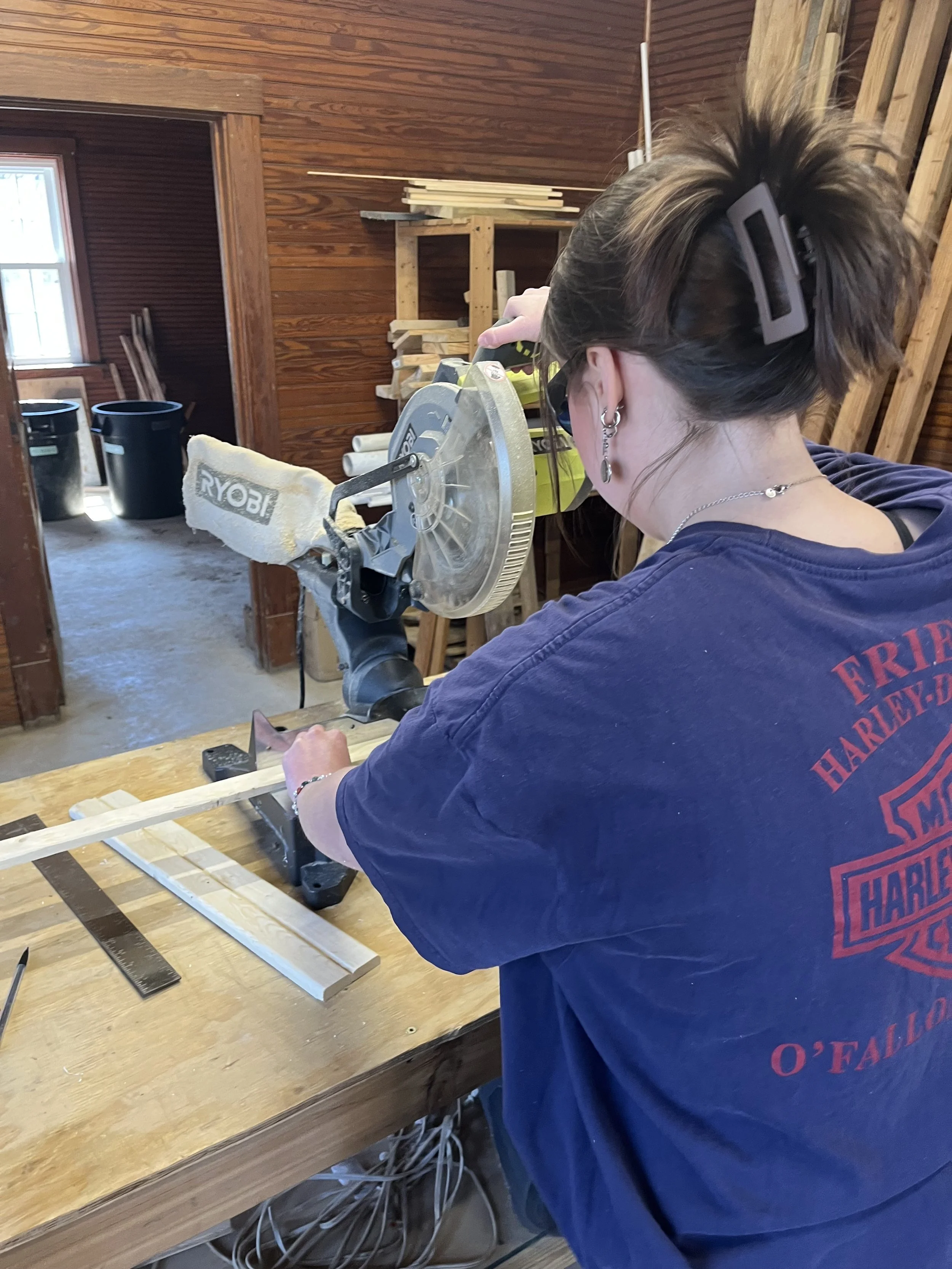
(Rebecca Engberg cutting wood).
Mosaic Garden Project
As part of an Agroecology in Action project, students from FST320 are redesigning the Mosaic Garden in front of the EBC. Work so far has included clearing the area of weeds and invasive plants, removing irrigation lines, and testing the soil health. The new garden will include culinary herbs, native flowers, and elderberry and service berry bushes.
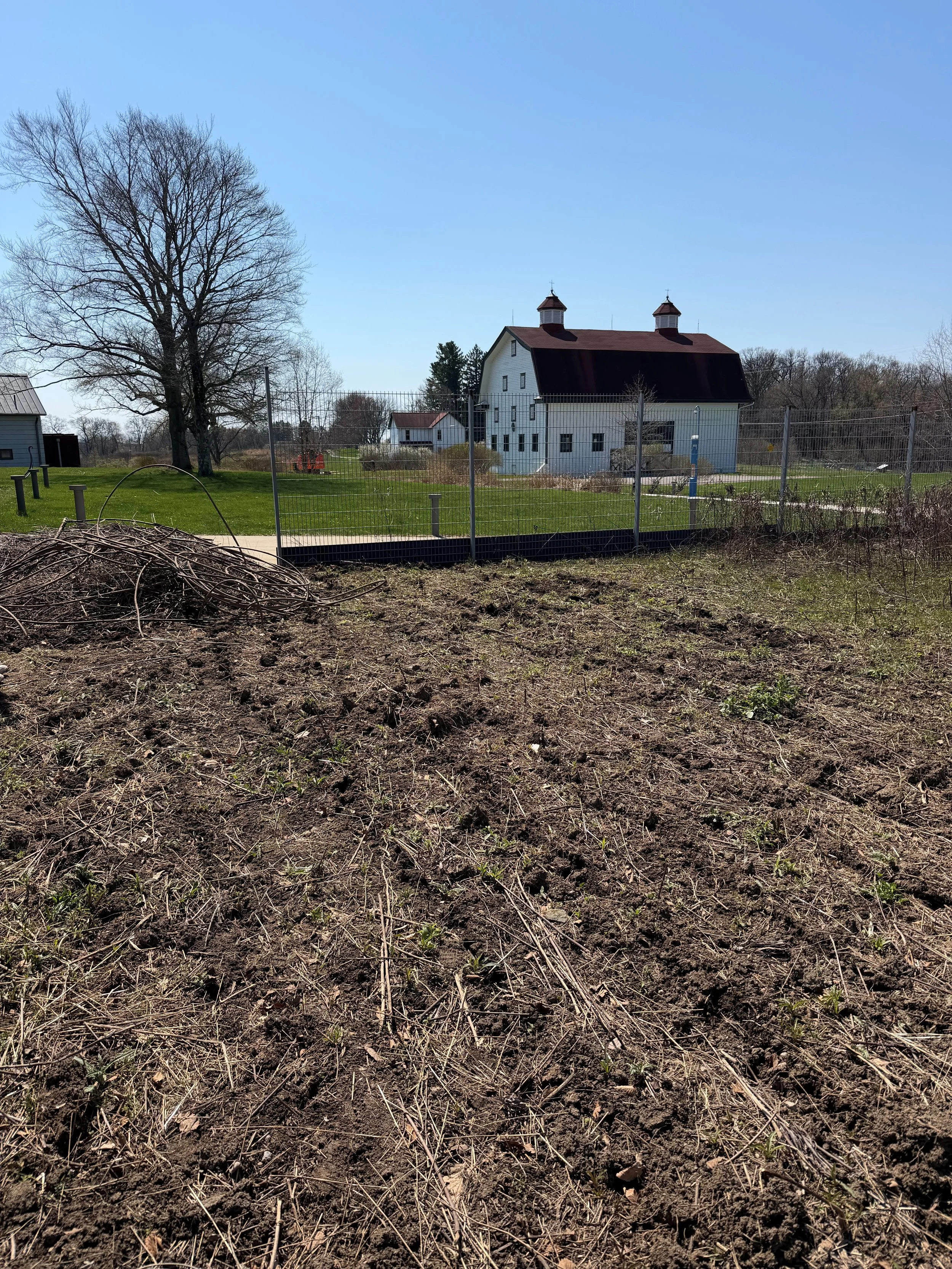
Mosaic Garden in front of EBC
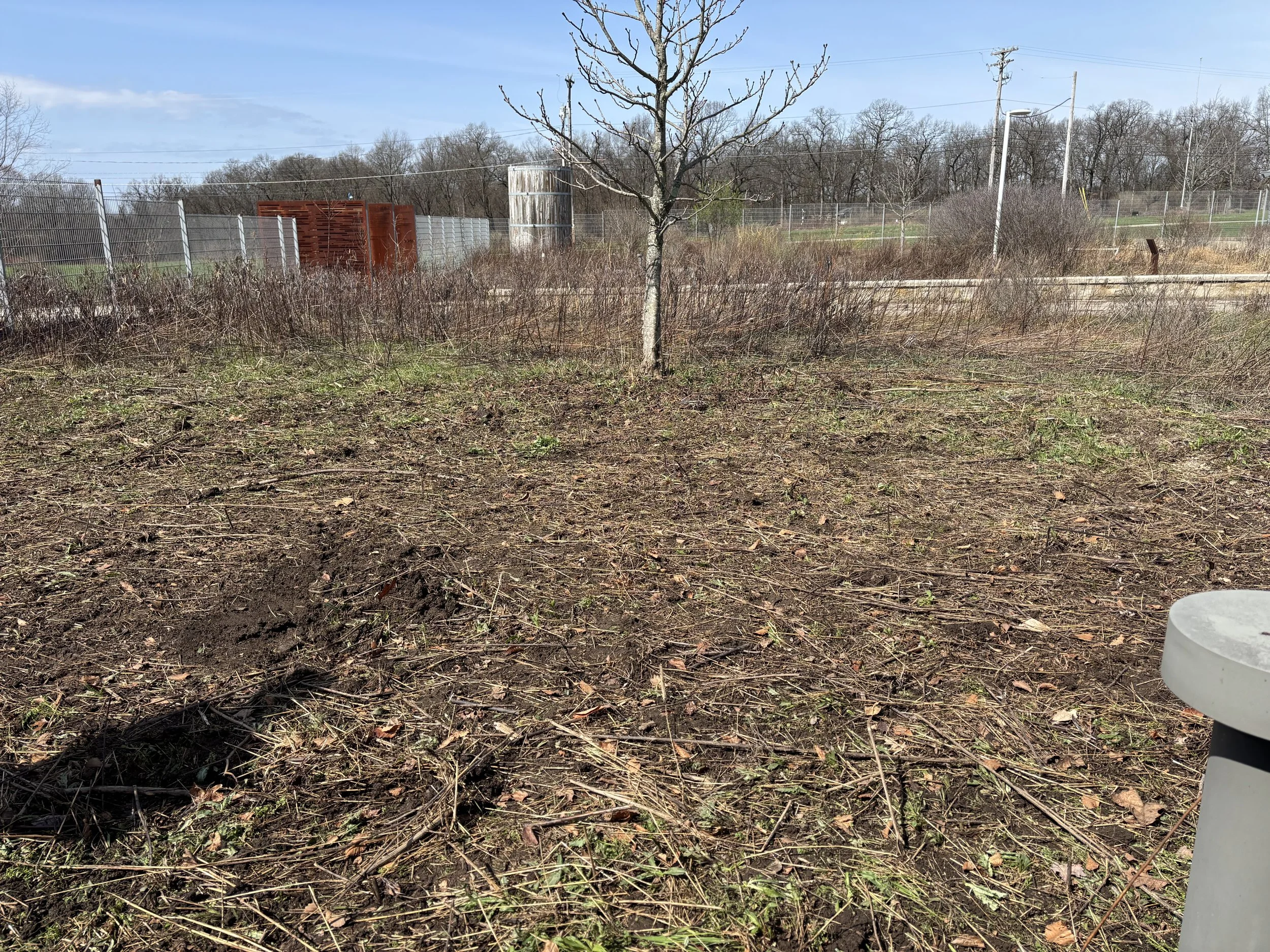
Progress on Mosaic Garden
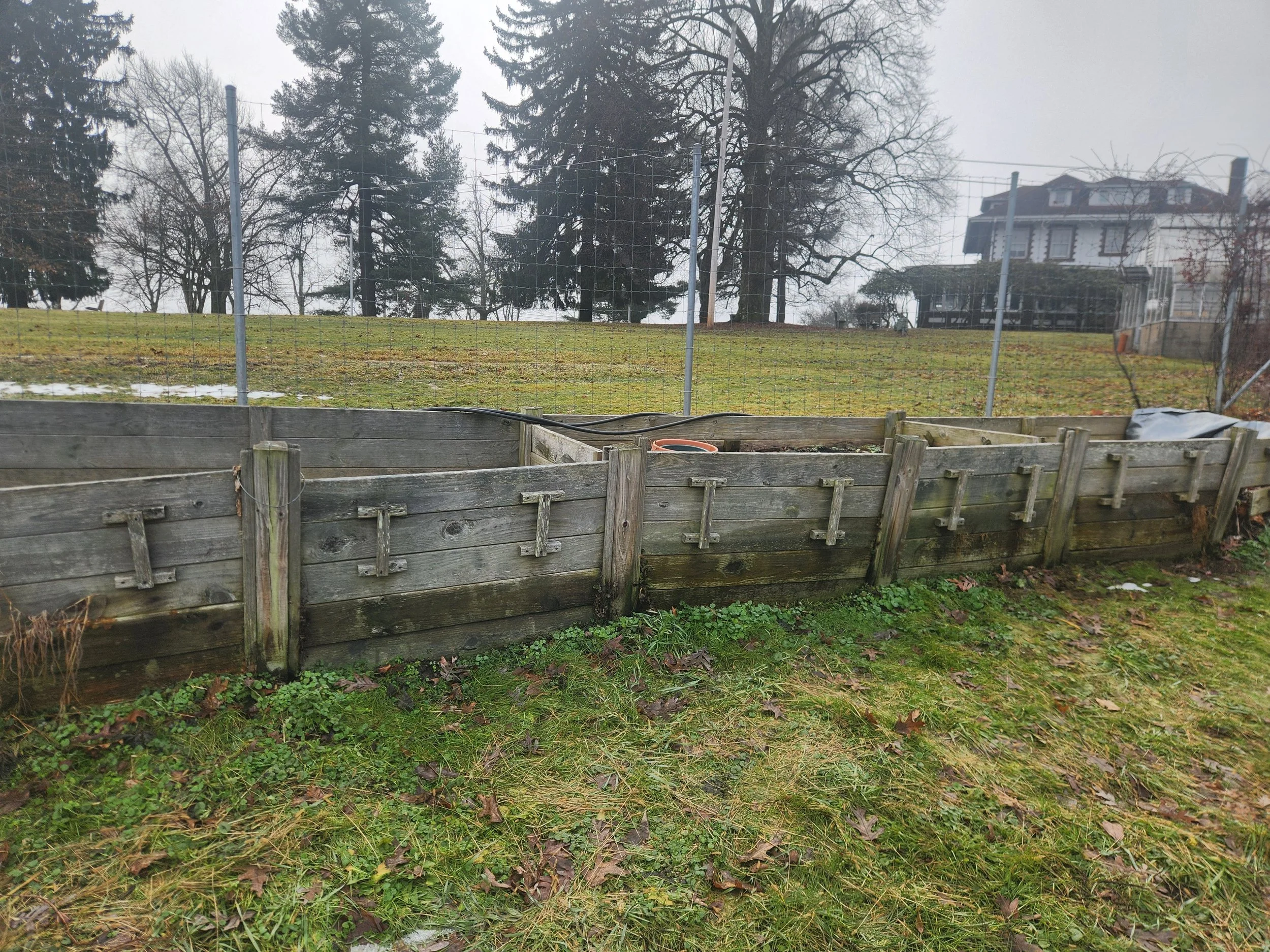
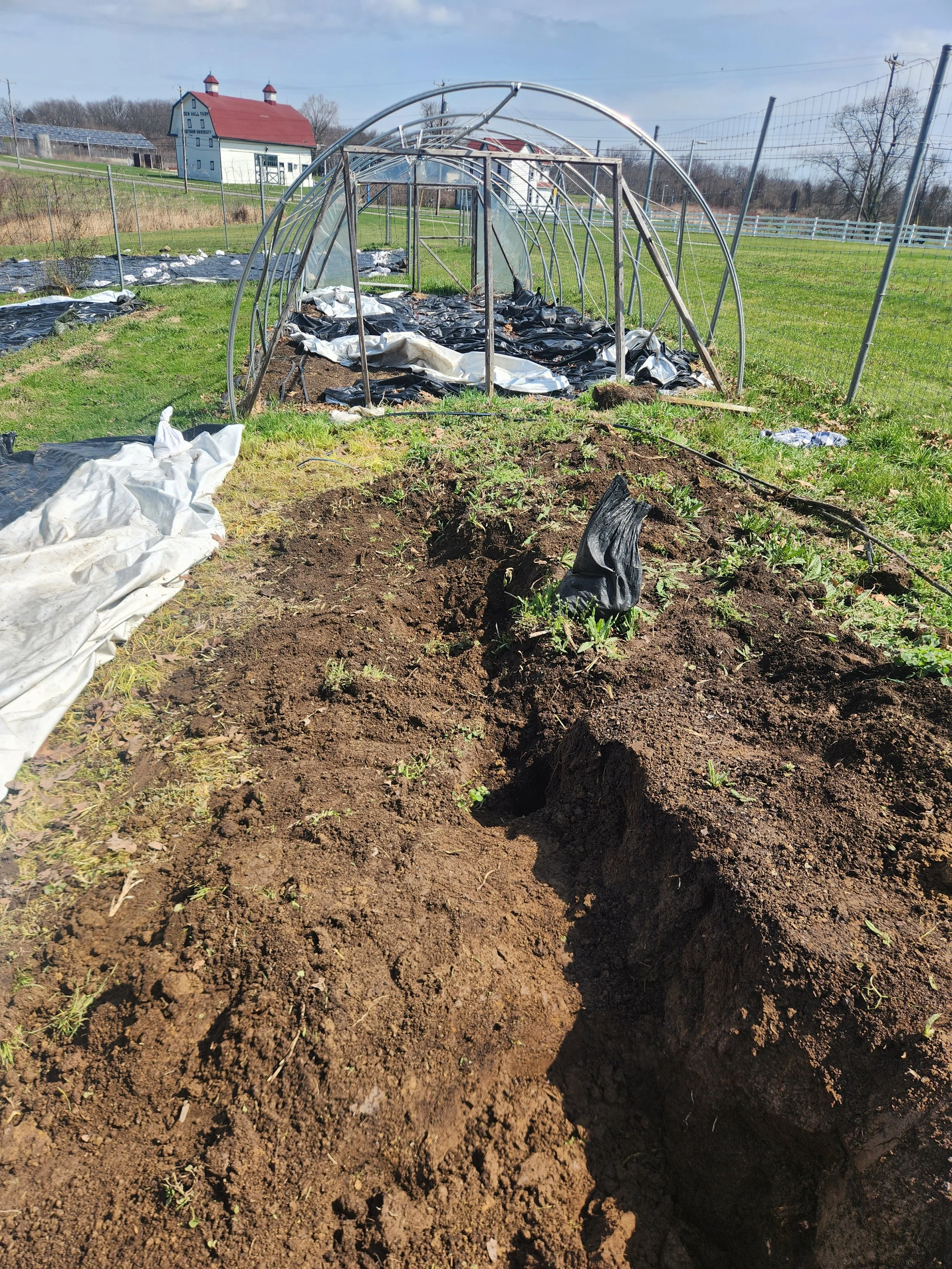
Raised Bed Deconstruction and Garden Redesign
Our project focused on deconstructing the old, raised garden bed in the agroecology demonstration garden. The old raised bed was not very efficient for growing crops, so we took it down in order to build up new beds at ground level that can be easily incorporated with current irrigation and crop rotation systems in the ADG.
Thank you all for your hard work and commitment to this project. Your contributions, collaboration, and dedication have played an essential role in making these efforts successful.
Want to see Eden Hall Campus for yourself? Attend our Falk School Graduate Saturday Visit Day on March 11th, our undergraduate Falk School Academic Visit Day on March 14th and April 4th, or schedule a visit at another time.