
From Slope to Syrup: A GIS Journey into Maple Trees
Nat Burgeff and Marty Farchione spent the Spring 2026 semester analyzing and collecting data on maple trees at Eden Hall Campus. As they prepare to graduate with their MSUS in Sustainability, both wanted to make one final contribution in support of Eden Hall Farm.
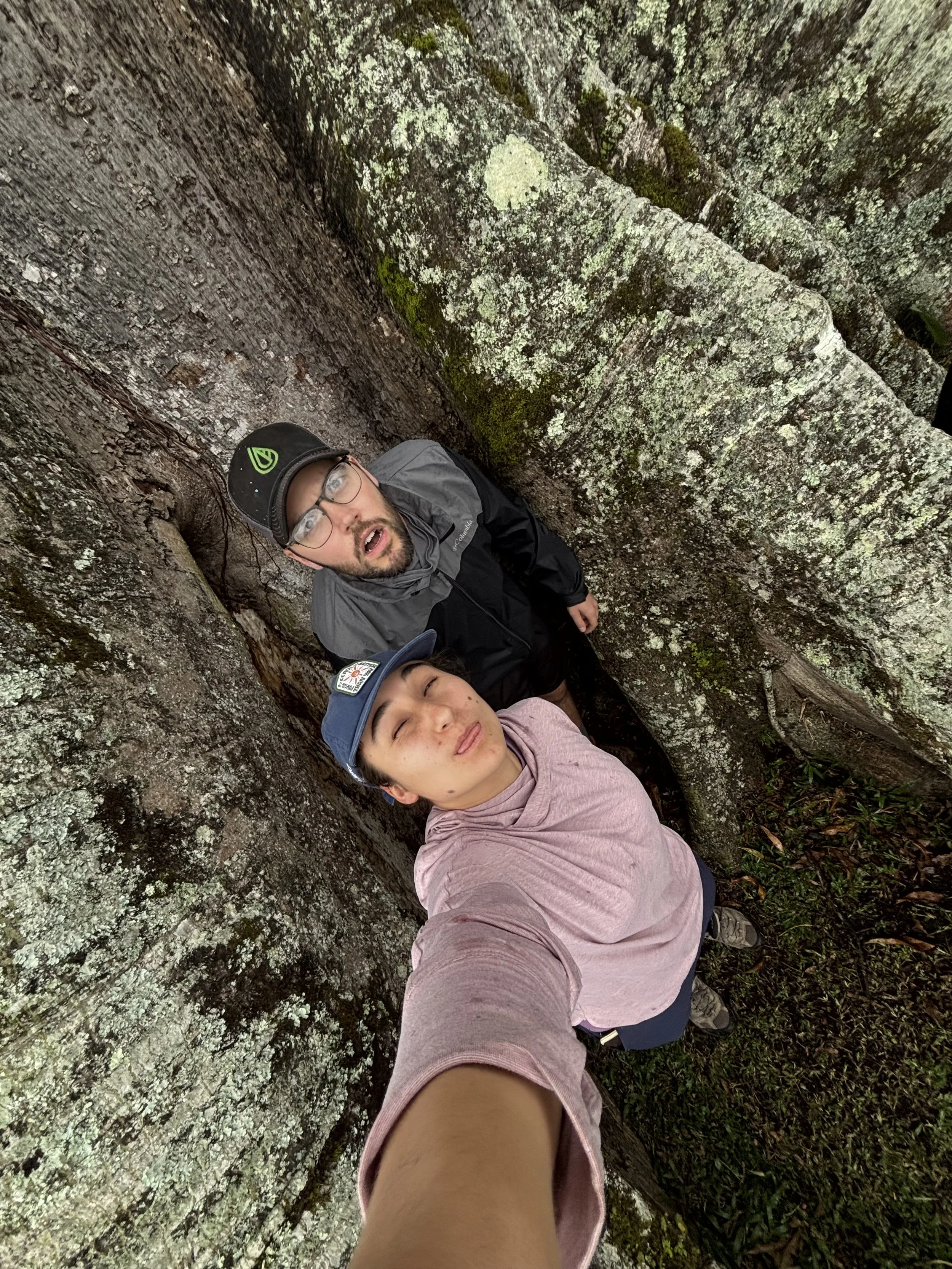
Nat and Marty in Costa Rica.
Using Geographic Information Systems (GIS), their research examines how slope, aspect (terrain direction), and vegetation health influence sap production across campus. By combining elevation data, field-collected sap records, and satellite-based vegetation analysis (NDVI), the team created detailed maps that uncover patterns not visible to the naked eye.
These insights will help Eden Hall Farm better understand which areas of campus are most productive for maple tapping, supporting more informed and sustainable management of this seasonal resource.
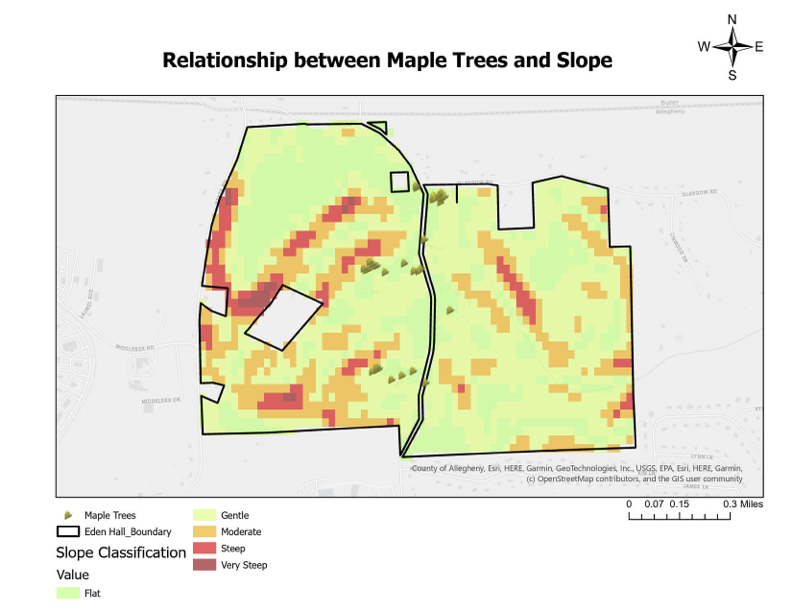
(Burgeff and Farchione, 2026)
“Indira challenged us to map how slope and terrain might influence maple sap production across our beautiful campus—turns out, even trees have a preferred angle.”
Building on that idea, our analysis reveals that terrain plays a meaningful role in sap production at Eden Hall. Maple trees tapped on south- and west-facing slopes, particularly near the Lodge and Storage Barn, consistently produced higher sap yields. These areas receive more sunlight, strengthening the daily freeze–thaw cycles that drive sap flow. In contrast, locations with less solar exposure—such as east- and north-facing slopes—tended to be less productive.
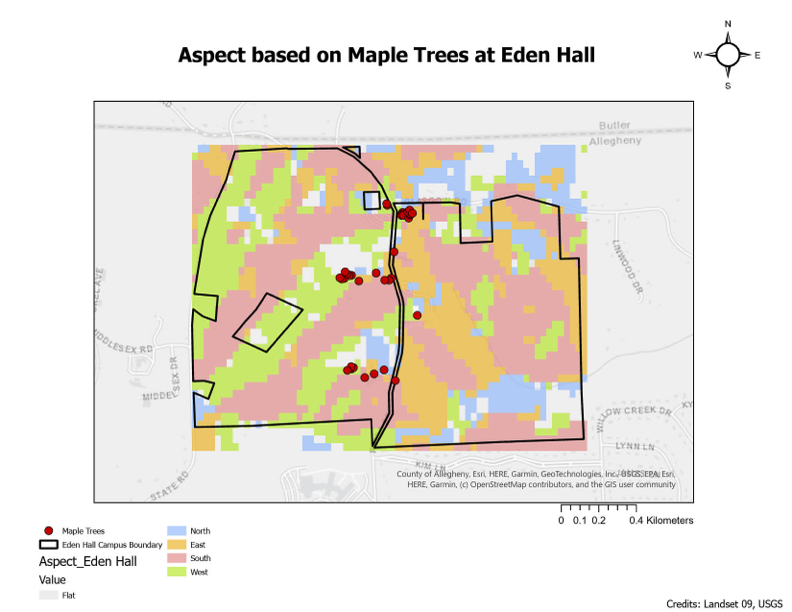
(Burgeff & Farchione, 2026)
This map highlights how the direction of the land (aspect) varies across campus and how it relates to maple tree tapping locations. Each color represents a different slope direction, helping visualize how sunlight exposure differs across the landscape. The clustering of tapped trees in sunnier areas reinforces the connection between terrain orientation and sap production.
By comparing aspect with tapping zones, the map shows how natural landscape features influence maple syrup production. Overall, these patterns demonstrate how slope, aspect, and environmental conditions work together to shape sap yield, helping identify the most favorable and sustainable areas for maple tapping at Eden Hall.
Burgeff and Farchione have dedicated much of their time at Eden Hall to hands-on, meaningful work like this project. We congratulate them on their graduation and look forward to seeing what comes next for them both.